
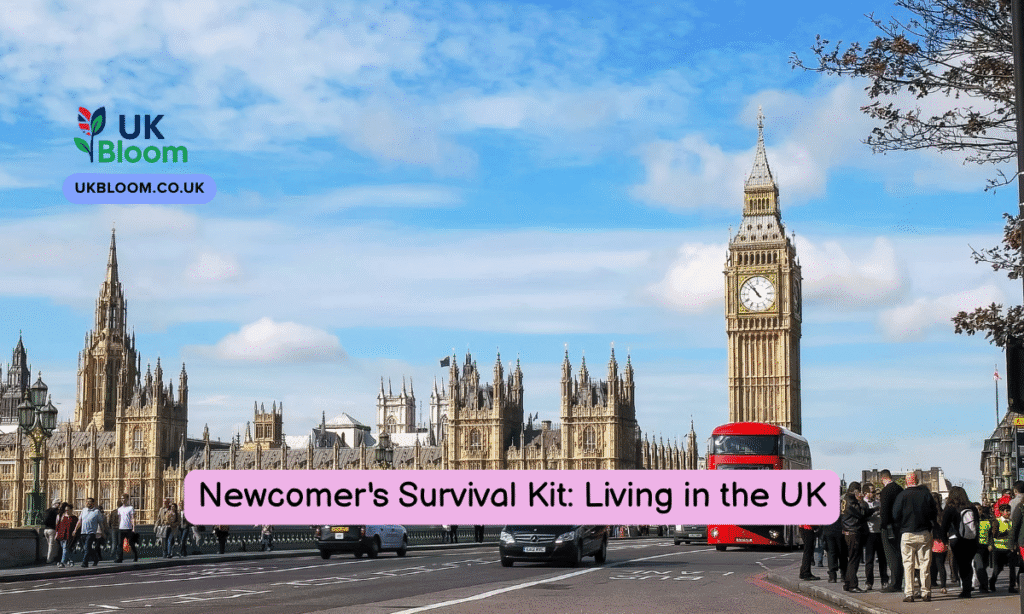
At UKBloom, we often hear from newcomers and families planning their move to the UK that starting life in a new country can feel both exciting and overwhelming. Whether you are arriving as a student, relocating with a skilled worker visa, or settling your family in cities like Birmingham, Manchester, or Belfast, the first few months are filled with big decisions.
This Newcomer’s Survival Kit: Living in the UK provides practical, step-by-step guidance to help you settle smoothly. From finding accommodation to registering with a GP, understanding transportation, and managing everyday costs, this guide walks you through the essentials of building a secure and comfortable life in the UK.
Table of Contents
Step 1: Understand the Basics of Life in the UK
Before you settle, it helps to learn about the UK’s culture, services, and daily life.
- The UK consists of England, Scotland, Wales, and Northern Ireland – some laws and services vary by region.
- Official language: English (but Welsh, Scots Gaelic, and Irish are also spoken locally).
- Currency: Pound Sterling (£).
- Driving: On the left side of the road; international licenses may be valid for up to 12 months.
- Climate: Temperate but variable – carry an umbrella and a light jacket year-round.
Step 2: Immigration, Visas, and Legal Status
Your visa type determines your work rights, study permissions, and access to public services.
Key Visa Routes
- Skilled Worker Visa – for qualified professionals offered a UK job.
- Student Visa – for full-time study at a licensed institution.
- Family Visa – for joining relatives or a spouse in the UK.
Practical Tip: Always check your visa conditions (work limits, length of stay, no recourse to public funds). Use Gov.uk for official immigration updates.
Example:
Ravi, an engineer from India, moved to Belfast on a Skilled Worker Visa. His visa allows full-time work but does not automatically grant access to certain public benefits, so budgeting carefully during the first months was crucial.
Step 3: Finding a Place to Live
Housing is often the biggest challenge for newcomers.
Where to Start
- Online property portals: Rightmove, Zoopla, SpareRoom (for shared accommodation).
- Student housing: Universities offer on-campus halls or approved housing lists.
- Short-term rentals: Consider Airbnb or serviced apartments while you search for long-term options.
Costs at a Glance
| City | Average Rent (1-bed flat) | Council Tax Band (Monthly) |
|---|---|---|
| London | £1,800–£2,200 | £100–£200+ |
| Birmingham | £800–£1,000 | £80–£150 |
| Belfast | £700–£900 | £70–£120 |
| Manchester | £900–£1,200 | £85–£150 |
Key Steps for Renting:
- Check if you need a UK guarantor. Some landlords require one if you’re new.
- Understand tenancy agreements – ensure they specify rent, deposit, and notice periods.
- Budget for council tax (students are usually exempt).
- Verify landlord credentials or use an agency to avoid scams.
Step 4: Setting Up Banking and Finances
Opening a UK bank account helps you receive your salary, pay rent, and avoid high foreign card fees.
How to Open a Bank Account
- Choose a bank: High Street options (HSBC, Barclays, Lloyds, NatWest) or digital banks (Monzo, Starling).
- Provide documents: Passport, visa, proof of address (rental agreement, utility bill).
- For newcomers without proof of address: Some banks accept university letters or employer references.
Example:
Anna, a postgraduate student from Poland, used her university acceptance letter to open a student bank account, which offered no monthly fees and an overdraft facility.
Step 5: Registering with Healthcare Services
The UK’s National Health Service (NHS) provides healthcare to residents.
What to Do Immediately
- Register with a GP (General Practitioner) in your local area.
- Register with a dentist – NHS dentists can be hard to find, so check early.
- Check if you paid the Immigration Health Surcharge (IHS): Most visas require it, granting NHS access.
Emergency Care: Dial 999 for emergencies or 111 for non-emergency medical advice.
External reference: NHS: How to access healthcare services
Step 6: Understanding UK Employment
Whether you are working part-time as a student or starting a full-time role, know your employment rights (see [UKBloom Employment Rights Guide – Placeholder Link]).
Key Points
- National Minimum Wage (2025): £11.44 for ages 23+ (lower rates for younger workers).
- Payslips are mandatory and must show tax deductions.
- Right to request flexible working after 26 weeks in a role.
Case Example:
Omar, a software engineer in Manchester, requested flexible hours to manage school pick-ups. UK law supported his request, and his employer offered hybrid work options.
Step 7: Transportation and Getting Around
- Oyster Card in London for discounted travel on buses, trains, and the underground.
- Railcards for students (16-25 Railcard) or professionals (Network Railcard) to save up to 1/3 on fares.
- Driving: Check if your foreign license is valid or exchangeable via Gov.uk.
- Cycling: Many cities have cycle lanes, and bikes are cheaper for commuting short distances.
Step 8: Education and Childcare
If you’re moving with children:
- Public (state) schools are free; admissions depend on catchment areas.
- Private schools charge fees (£4,000–£6,000 per term on average).
- Childcare: Nursery costs vary significantly (£60–£100 per day in large cities).
UKBloom Cost of Childcare Calculator
Step 9: Everyday Essentials and Cost of Living
Utility Bills to Expect
- Electricity and Gas: £100–£200 per month (depending on property size).
- Water: £30–£50 per month.
- Internet: £25–£40 per month.
- Mobile SIMs: Pay-as-you-go or contracts starting from £10–£20 per month.
Grocery Costs at a Glance
| Item | Average Price (2025) |
|---|---|
| 1L Milk | £1.20 |
| Bread Loaf | £1.50 |
| Chicken (1kg) | £7.50 |
| Monthly grocery (1 person) | £200–£250 |
Step 10: Building a Social and Support Network
Settling in isn’t just about logistics – building a community makes the UK feel like home.
- Join local cultural associations or religious groups.
- Use Meetup or Eventbrite to find social gatherings.
- University students: Use campus clubs to make friends quickly.
- Follow UKBloom resources for helpful relocation tips
Step-by-Step Survival Checklist
In your first week:
- Arrange temporary housing
- Get a UK SIM card
- Register with a GP
In your first month:
- Open a bank account
- Find long-term accommodation
- Enrol children in school (if applicable)
Within three months:
- Understand UK taxes and council tax
- Apply for National Insurance Number (if working)
- Build a local support network
FAQs
Do I need a National Insurance Number immediately?
If you plan to work, yes – apply as soon as possible via Gov.uk.
Can international students work part-time?
Yes. Typically up to 20 hours per week during term time and full-time during vacations, depending on visa conditions.
How do I avoid housing scams?
Always verify landlord or agent credentials, never pay cash without a receipt, and view properties in person where possible.
What if I get sick before registering with a GP?
You can still access walk-in clinics or emergency hospital care, but register with a GP quickly to avoid delays.
Useful Resources
- Gov.uk – Settling in the UK
- NHS – Registering with a doctor
- UKBloom Employment Rights Guide
- UKBloom Skilled Worker Visa Guide
- UKBloom Life in the UK Test Guide
Final Notes
Settling into life in the UK is a journey – from finding housing and setting up banking to understanding healthcare and building a community. This Newcomer’s Survival Kit: Living in the UK gives you the essentials to navigate confidently. With planning, reliable information, and local support, your first months in the UK can be smooth and rewarding.
Disclaimer
This article is for informational purposes only and does not constitute legal or immigration advice. Please refer to official UK government sources or seek legal support for specific guidance.
Copyright Notice
© UKBloom.co.uk. This article is protected by copyright law. Reproduction or AI-generated copies are not permitted. Legal action will be taken against unauthorised use.