
At UKBloom, we know that one of the biggest steps toward independence in the UK is learning how to drive, or at least learning how to share the roads safely. Whether you are a student commuting to university, a newly arrived professional balancing work and childcare, or a family settling into a new community, the Highway Code is your essential guide for understanding the rules of the road.
For newcomers, immigrants, and international students, the Highway Code can feel confusing at first. After all, the UK’s driving system differs from much of the world: we drive on the left-hand side, speed limits are displayed in miles per hour, and there are unique rules for pedestrians, cyclists, and public transport vehicles.
This article breaks everything down clearly, offering guidance, tips, and relatable examples to help you not just obey the rules but feel confident, safe, and respected while travelling in the UK.
Table of Contents
What Is the Highway Code?
The Highway Code is the official set of rules, guidance, and advice for all road users in the UK, published by the Department for Transport and backed by the law. It applies in:
- England, Scotland, and Wales (with standardised rules).
- Northern Ireland, which has a very similar version, was produced by the Department for Infrastructure.
It is not just for drivers. It covers:
- Drivers of cars, vans, and lorries.
- Motorcyclists, cyclists, and e-scooter riders.
- Pedestrians, including parents with buggies and schoolchildren.
- Horse riders.
Some rules are legal requirements (must be obeyed by law), while others are advisory guidance that helps keep everyone safe.
Why the Highway Code Matters for Newcomers
Understanding the Highway Code is critical if you are:
- Converting a foreign licence OR taking a UK driving test.
- Cycling to work or school, especially in cities with heavy traffic.
- Walking with children and needing to navigate crossings safely.
- Using buses and trains, which share spaces with cyclists and pedestrians.
Case Study – A Working Parent
Maria, originally from Spain, works as a nurse in Birmingham and needs to drop her children off at school before driving to the hospital. By knowing the rules about school zones (20 mph limits) and pedestrian crossings, she avoids fines and ensures her family’s safety.
Key Principles of the Highway Code
1. Road Priority and the New Hierarchy of Users
The most recent updates place greater responsibility on those driving vehicles that cause the greatest harm in a collision.
The most recent updates place greater responsibility on those driving vehicles that cause the greatest harm in a collision.
- Pedestrians come first, especially at junctions and crossings.
- Cyclists and horse riders are protected more than cars, vans, and lorries.
- Drivers of large vehicles (e.g., HGVs, buses) bear the highest responsibility.
2. Driving on the Left
- In the UK, vehicles drive on the left-hand side of the road.
- Overtaking is typically done on the right side.
3. Speed Limits
- Motorways: 70 mph (unless otherwise stated).
- Urban Roads: Usually 30 mph; 20 mph limits are common in school zones or residential streets.
- Single-carriageway roads: 60 mph unless lowered for safety.
4. Defensive Driving & Courtesy
- Always signal early when turning or changing lanes.
- Give cyclists at least 1.5 metres of space when overtaking.
- Stop for pedestrians at zebra crossings.
Key Rules for Pedestrians
Pedestrians remain the most vulnerable road users. Rules to note:
- Use pavements (sidewalks) where available.
- Cross at controlled crossings (traffic lights, zebra crossings, or footbridges).
- If no crossing, choose a place with clear visibility, away from bends or junctions.
- Pedestrians now have priority at junctions: drivers turning into or out of roads must give way.
Rules for Cyclists and E-Scooter Riders
- Must follow traffic signals and road rules (stop at red lights).
- Should cycle in the centre of the lane on quiet roads or where safety requires visibility.
- Can filter past traffic but must do so cautiously.
- Helmets are not legally required but strongly advised.
- In most cities, private e-scooters are not permitted on public roads, but government rental e-scooters are allowed in trial areas.
Rules for Car Drivers and Motorcyclists
- Seatbelts: Legal requirement for drivers and passengers.
- Mobile Phones: Illegal to use handheld devices while driving (includes texting or checking maps). Only hands-free systems may be used.
- Drink Driving: Very strict; the safest option is none at all.
- Roundabouts: Give way to traffic coming from the right.
Case Example – A Student Driver
Ahmed, an international student from Egypt, is learning to drive in Manchester. He studies the Highway Code to understand roundabouts (which differ from systems in Cairo). By doing so, he avoids confusion and passes his theory test.
Public Transport, School Runs, and Shared Roads
- Cars must stop when school crossing wardens step into the road.
- Buses and trams often have dedicated lanes; driving in them during restricted hours can lead to heavy fines.
- Emergency vehicles (ambulances, police, fire engines) must be given priority—drivers should pull left safely to let them pass.
Comparison Table: UK Highway Code vs. Common International Rules
| Rule / Feature | UK Highway Code | Difference from Some Countries |
|---|---|---|
| Driving Side | Left-hand side | Give way to the right |
| Speed Limits | Posted in miles per hour | Some use kilometres per hour |
| Roundabout Priority | 80 mg per 100 ml blood (stricter in Scotland.) | In parts of Europe, priority may differ |
| Drink-Driving Limit | 80 mg per 100 ml blood (stricter in Scotland). | Some countries allow higher levels |
| Pedestrian Priority | High, especially at crossings & junctions | Not always legally enforced abroad |
How to Learn and Apply the Highway Code
Step 1 – Access the Highway Code
- View it online via the official GOV.UK site or purchase a printed copy.
- Download apps offering practice tests for the Theory Test.
Step 2 – Study for Exams (if learning to drive)
- Pass the Theory Test (multiple-choice + hazard perception).
- Take professional driving lessons that reinforce the Code.
Step 3 – Practical Application
- Practice safe habits daily, even as a pedestrian or cyclist.
- Observe other road users and watch for differences in local enforcement.
Categories of UK Road Signs
| Category | Shape/Colour | Purpose | Examples |
|---|---|---|---|
| Warning Signs | Triangle, red border | Warn of hazards/changes ahead | Bend, crossroads, roundabout, slippery road |
| Regulatory Signs | Circle, mostly red or blue | Orders (must do or must not do) | No entry, speed limit, turn left, no U-turn |
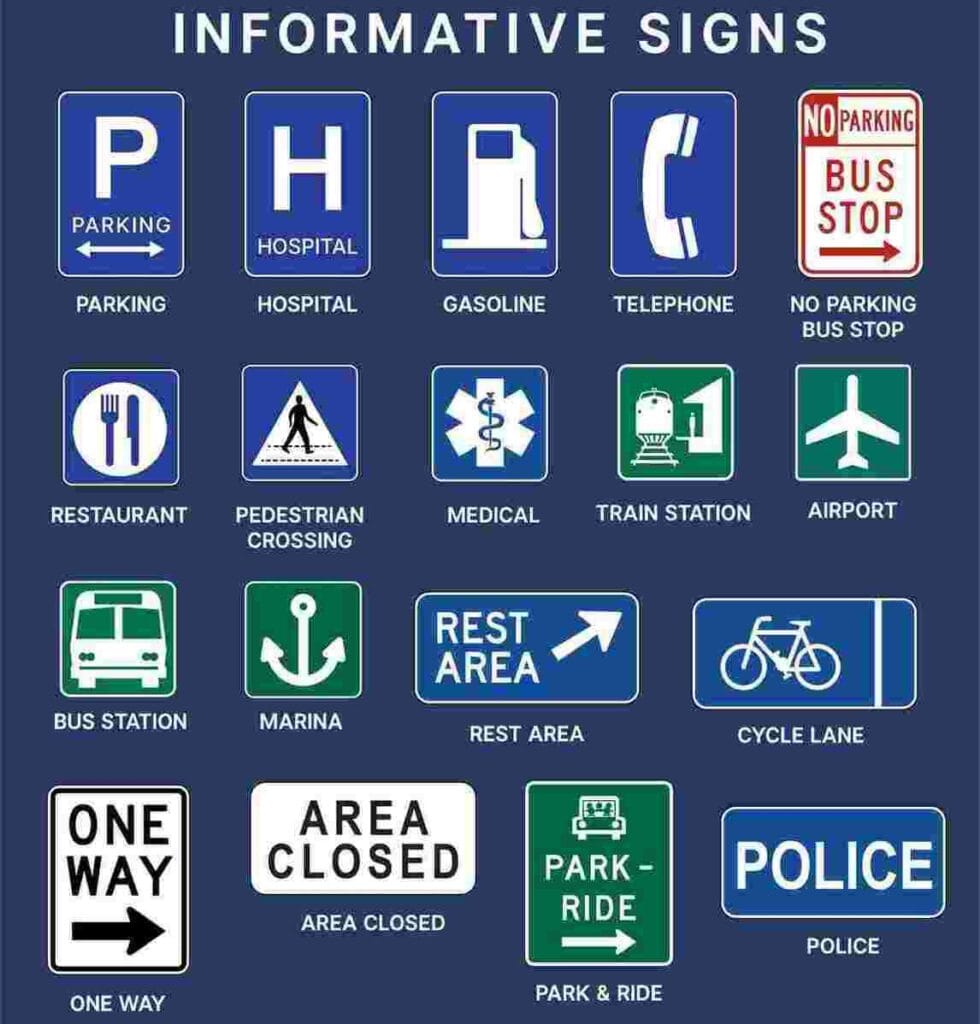
| Information Signs | Rectangle, blue/green/white | Provide useful info about the road or route | Directions, lane use, motorways, services |
| Direction Signs | Rectangle, various colours | Indicative directions and destination information | Route to city, motorway direction |
| Roadwork Signs | Triangle/Rectangle, yellow | Alert to roadworks/temporary changes | Road works ahead, lane closed |
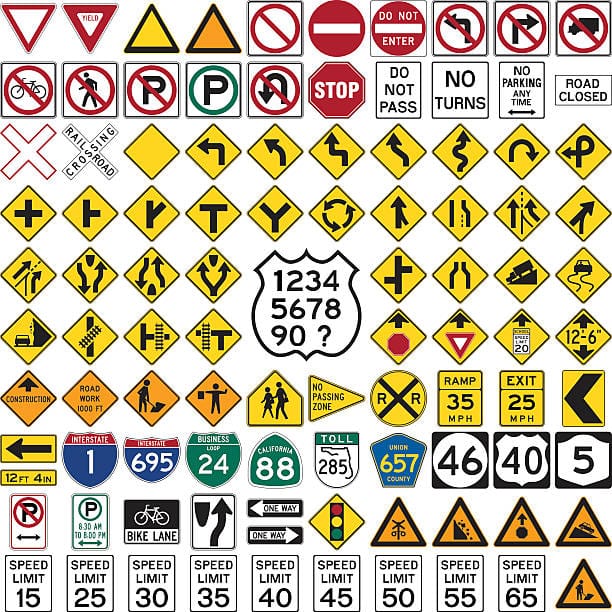
Table 2: Common UK Road Signs and Their Meanings
| Sign Type | Illustration/Shape | Typical Message / Instruction |
|---|---|---|
| Warning | ![Triangle, red border][warning] | “Sharp bend ahead” or “Pedestrian crossing ahead” |
| Regulatory – Mandatory | Blue circle | “Turn left” (required action) |
| Regulatory – Prohibitory | Red circle, often white background | “No entry” or speed limit (“30”) |
| Information | Rectangle, blue or green background | “One-way street” or road directions |
| Stop | Octagon, red | “STOP” (compulsory stop at line) |
| Give Way | Down triangle, red border, white | “Give Way” (yield) |
| National Speed Limit | White circle with black diagonal | National speed applies (60/70 mph) |
| Direction Motorway | Rectangle, blue background | Motorway route or direction |
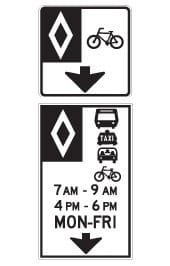
| Bus Lane | Rectangle, blue/white, bus image | Lane reserved for buses (sometimes also taxis, cycles) |
Note: For visual images of each sign type, refer to official resources or printed highway code books for learners.
Table 3: Key Highway Code Rules Overview
| Rule/Section | Summary |
|---|---|
| Drive on the left | Always drive on the left-hand side of the road (overtake on the right) |
| Speed limits | Follow speed limit signs: urban (30 mph), single carriageway (60 mph), motorway (70 mph) |
| Seatbelt legal requirement | All passengers and drivers must wear seatbelts |
| Mobile phone use | No handheld devices when driving, even while stationary at traffic lights |
| Pedestrian crossings | Stop if pedestrians are at a zebra, puffin or pelican crossing |
| Cyclist overtaking | Leave at least 1.5 metres’ clearance when overtaking |
| Drink-driving | Illegal to drive above the legal alcohol limit |
| Roundabouts | Give way to traffic from your right at roundabouts |
| School zones | Usually have 20 mph speed limits; watch for children and school crossing patrols |
Table 4: Examples of UK Road Markings
| Marking | Meaning |
|---|---|
| Broken white line (centre) | Divides lanes; overtaking allowed with caution |
| Double white lines (one solid, one broken) | Can pass if broken line is on your side; otherwise, do not cross except in special circumstances |
| Zebra crossing (black/white stripes) | Pedestrian has priority; you must stop if someone is crossing or about to cross |
| Yellow lines (single/double, kerb) | Can pass if the broken line is on your side; otherwise, do not cross except in special circumstances |
| Bus lane (road marking & sign) | Lane reserved for buses (sometimes taxis/cycles) during signed hours |
Tips for Newcomers
- Read the Highway Code before driving: Many insurance companies expect familiarity.
- Use learner-friendly apps: Practice hazard perception to train quick responses.
- Understand local enforcement: Some UK cities use cameras for bus lanes, box junctions, and red light enforcement.
- Budget for penalties: Fines can reach £100–£1,000 depending on the offence. Prevention is cheaper.
- Stay updated: The Highway Code is updated periodically, always check the latest version online.
Linking Suggestions
- Internal (UKBloom articles):
- “Cost of Living in the UK” (link under “Budget for penalties”).
- “International Student Survival Guide UK” (link where student drivers are mentioned).
- “UK Regional Transport Schemes” (link where public transport overlaps with driving rules).
- External (authoritative):
FAQs – Understanding the Highway Code for Newcomers
Q: Do I need to know the Highway Code if I don’t plan to drive?
Yes, pedestrians, cyclists, and e-scooter riders are also covered by the Code.
Q: Is the Highway Code legally binding?
Some rules are law; others are advisory. Failure to follow advisory rules can still be used as evidence of negligence in accidents.
Q: Can I use an international licence?
Yes, for a limited time (12 months for most countries). Beyond that, you may need to pass UK driving tests.
Q: Where do I find practice test resources?
The official DVSA Theory Test Kit app and GOV.UK.
Conclusion
For newcomers, understanding the Highway Code is not just about passing a driving test; it’s about being part of the UK’s road culture—whether walking, cycling, or driving. By learning the rules, applying them in real situations, and cultivating safe habits, you not only avoid penalties but also protect yourself and others.
Final Tip: Think of the Highway Code as a shared responsibility; every road user plays a role in keeping communities safe. Mastering it will make your life in the UK smoother, safer, and more confident.
Disclaimer: This article is for informational purposes only and does not constitute legal or immigration advice. Please refer to official UK government sources or seek legal support for specific guidance.
Copyright Notice: © UKBloom.co.uk. This article is protected by copyright law. Reuse allowed with proper credit to your website.