
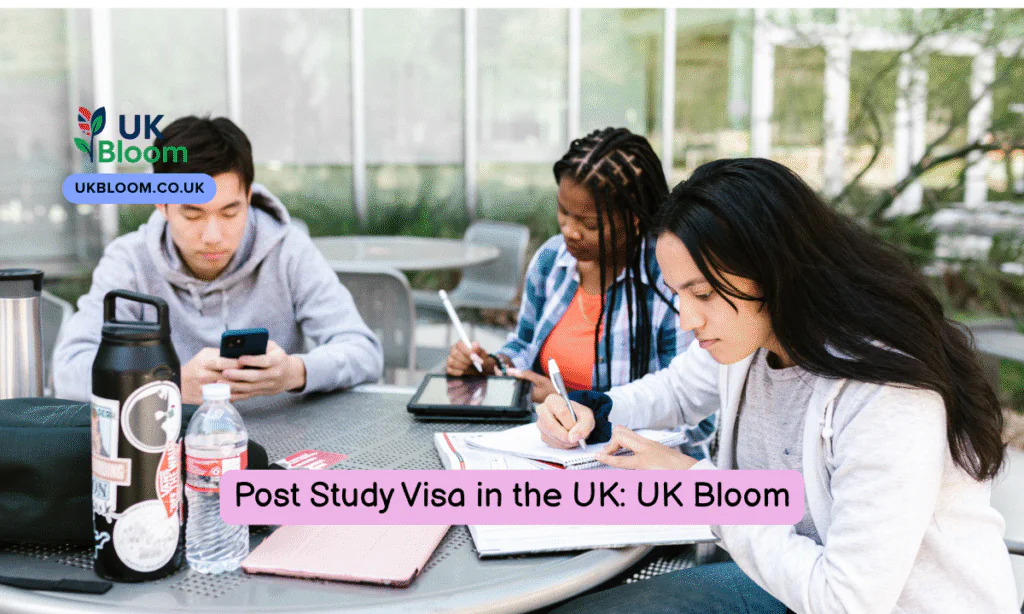
At UKBloom, we know that finishing your studies is both exciting and daunting. For international students, the next question after graduation is often: What comes next?
The Post-Study Visa in the UK, officially called the Graduate Visa, is a pathway that allows you to stay in the UK after completing your degree, providing you with the freedom to gain work experience, explore career opportunities, and enjoy life in one of the most dynamic countries in the world.
This guide is designed to be your go-to resource. We’ll cover eligibility, application steps, costs, career paths, family life, and common pitfalls to avoid. We’ll also share case studies, real-life scenarios, and planning tips to help you make the most of your time in the UK.
Table of Contents
What is the Post Study Visa in the UK?
The Graduate Visa was introduced in July 2021 as part of the UK’s effort to attract and retain international talent.
- Duration: 2 years for undergraduates and master’s students; 3 years for PhD or doctoral graduates.
- Flexibility: You don’t need a job offer or employer sponsorship.
- Purpose: Designed to allow graduates to explore work opportunities in any sector, from hospitality to healthcare, while building experience that could lead to a long-term visa.
For many students, this visa serves as a bridge, providing breathing space between the end of their studies and the start of their professional or settlement journey.
Eligibility for the Graduate Visa

To qualify, you must meet the following conditions:
You must apply before your Student Visa expires.
You must be in the UK on a valid Student Visa (formerly Tier 4).
You must have completed a recognised course, such as:
- A UK bachelor’s degree
- A UK master’s degree
- A UK PhD or doctorate
Your university or institution must be a licensed sponsor.
Courses that do not qualify
- Short-term study courses
- Foundation or pre-sessional English language courses
- Training or professional certificates that are not listed as eligible
Application Process for the PSW Visa in the UK
Here’s a step-by-step walkthrough of the application:
Step 1: Confirm Course Completion
Your university must notify the UK Home Office that you have completed your course. Without this confirmation, your application will be delayed.
Step 2: Gather Required Documents
You’ll need:
- A valid passport or travel document
- Your current visa or Biometric Residence Permit (BRP)
- Your Confirmation of Acceptance for Studies (CAS) reference number from your Student Visa
- Digital proof of identity (via the UK Immigration app or a biometric appointment if required)
Step 3: Apply Online
Applications are submitted online at the official UK Government Graduate Visa portal.
Step 4: Pay Fees
- Application fee: £822
- Immigration Health Surcharge (IHS): £1,035 per year (so £2,070 for a two-year visa or £3,105 for a three-year PhD visa)
Step 5: Biometric Verification
Some applicants will need to attend a UKVCAS appointment to provide fingerprints and photographs. Others can use the UK Immigration ID Check app.
Step 6: Wait for a Decision
Most decisions are made within 8 weeks. You can stay in the UK while you wait.
Rights and Restrictions on the Graduate Visa
What you can do:
- Work in most jobs, including temporary, part-time, and freelance roles.
- Be self-employed.
- Travel freely in and out of the UK.
- Study further (though not at a level that would normally require a Student Visa).
What you cannot do:
- Access public funds (benefits, Universal Credit, housing assistance, etc.).
- Work as a professional sportsperson or coach.
- Extend this visa directly (you must switch to another visa before it expires).
Costs of Living While on a PSW Visa
Many graduates underestimate how expensive living can be, especially without access to public funds. Here’s a realistic breakdown for newcomers:
| Expense | Average Monthly Cost (London) | Average Monthly Cost (Other UK Cities) |
|---|---|---|
| Rent (1-bedroom flat) | £1,200–£1,800 | £600–£900 |
| Utilities & Internet | £150–£250 | £100–£180 |
| Transport | £150–£200 | £70–£100 |
| Groceries | £250–£350 | £200–£280 |
| Childcare (nursery full-time) | £1,200+ | £800–£1,000 |
Tip: Many graduates share accommodation to save on rent.
Balancing Work and Family Life
A significant number of international graduates are not just students—they are also parents, partners, or caregivers. The PSW Visa allows you to work flexibly, but planning is Important.
Example: Childcare
Amir, a postgraduate student in Manchester, stayed on a Graduate Visa with his wife and two children. Since public childcare support was not available to them, they relied on:
- Local council services (some councils offer subsidised places for low-income families)
- Employer childcare vouchers
- Community childcare co-operatives run by immigrant networks
Example: Work-Life Balance
Many graduates initially take on flexible jobs—hospitality, retail, delivery driving—to manage income while applying for career-specific roles. The ability to work without restrictions provides much-needed breathing space.
Transition to Long-Term Visas
The Graduate Visa is temporary. If you wish to stay beyond two or three years, you must switch to another visa type.
Options include:
- Skilled Worker Visa – For graduates with job offers from licensed UK employers. This visa leads to settlement after 5 years.
- Global Talent Visa – For those with exceptional skills in academia, research, arts, or technology.
- Innovator Founder Visa – For entrepreneurs starting innovative businesses.
- Family Visa – If you have a partner or family member with settled status.
- Student Visa Extension – If pursuing further study (though limited options apply).
Case Study: Maria’s Journey
Maria, originally from India, studied for her master’s in Belfast. After graduation, she stayed in Northern Ireland on a Graduate Visa. Initially, she took part-time work in childcare support while volunteering at a tech startup.
Within 18 months, her volunteering turned into a full-time software developer role, and her employer sponsored her Skilled Worker Visa. She is now on the path to permanent settlement.
This case highlights the flexibility the Graduate Visa provides, allowing graduates to pivot from temporary work to professional careers.
Common Mistakes to Avoid
- Waiting too long to apply – Apply before your Student Visa expires.
- Assuming you can extend – This visa cannot be renewed; plan ahead.
- Relying on public funds – Remember, benefits are not available.
- Not checking dependents’ eligibility – Only family members who were dependents during your Student Visa can extend with you.
- Not planning financially – Budget carefully for IHS, rent, and childcare.
Comparison Table: Graduate Visa vs Skilled Worker Visa
| Feature | Graduate Visa | Skilled Worker Visa |
|---|---|---|
| Duration | 2 years (3 for PhD) | Up to 5 years |
| Sponsorship Needed? | No | Yes |
| Eligible Jobs | Any (except pro sports) | Skilled/Shortage List jobs only |
| Path to Settlement | Indirect | Direct (after 5 years) |
| Application Fee | £822 + IHS | £719–£1,500 + IHS |
| Dependents Allowed? | Yes (if dependents on Student Visa) | Yes |
FAQs
Can I apply for the Graduate Visa from outside the UK?
No. Applications must be made within the UK.
Can I bring new dependents?
No. Only dependents already in the UK with you under your Student Visa can extend.
Can I start a business?
Yes, you can be self-employed. However, if your goal is a long-term business venture, the Innovator Founder Visa may be more suitable.
Will I qualify for permanent residency?
Not directly. But time spent on a Skilled Worker Visa or other settlement routes counts toward the 5-year residency requirement.
How long does it take to get a decision?
Usually within 8 weeks, though you may get a decision sooner.
Internal Linking Suggestions
- UK Visa Centre Finder
- New Survival Kit; Newcomer in the UK
- Work in the UK
- Understanding the UK Skilled Worker Visa
External Linking Suggestions
Conclusion
The Post Study Visa in the UK is a vital opportunity for international graduates. It gives you time to work, save, plan, and decide your next steps—whether that means applying for a Skilled Worker Visa, starting a business, or returning home with international experience.
By budgeting carefully, understanding your rights, and preparing for the next visa stage early, you can make the most of this transitional period.
Disclaimer
This article is for informational purposes only and does not constitute legal or immigration advice. Please refer to official UK government sources or seek professional legal guidance.
Copyright Notice
© UKBloom.co.uk. This article is protected by copyright law. Reuse allowed with proper credit to your website.

One thought on “Post Study Visa in the UK: UK Bloom”